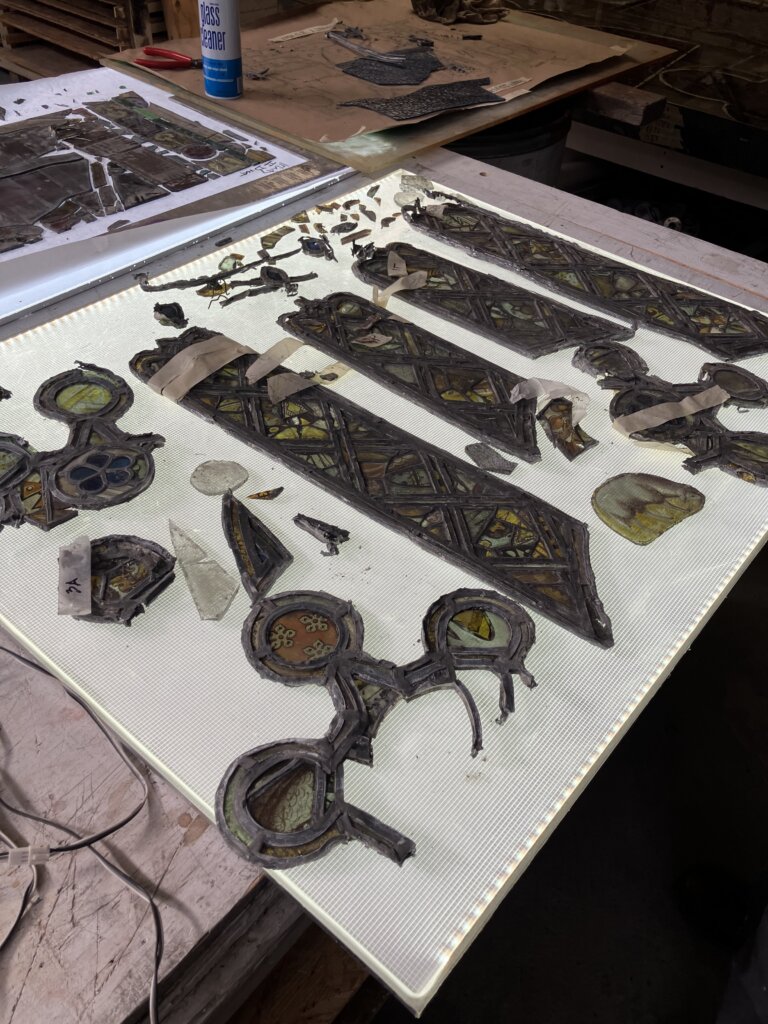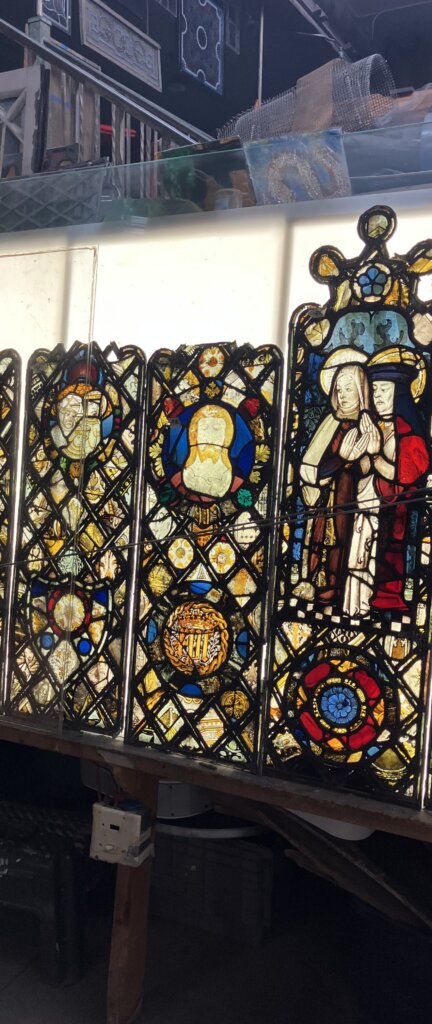
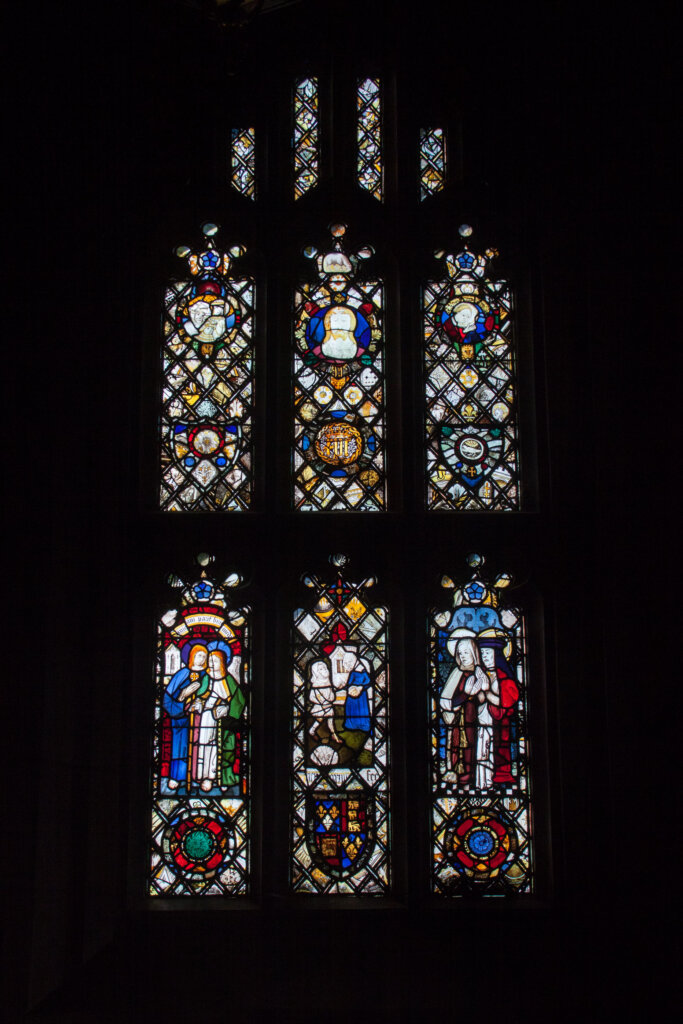
One of Trinity Cathedral’s most historic stained glass windows was carefully removed in February for specialized conservation and repair. Located in the west transept, the windows were created in England in the 15th century, incorporating fragments of even older 14th-century glass. They serve as an exceptionally rare example of medieval stained glass.
The windows are now in the care of Whitney Stained Glass Studio in Cleveland, where they are receiving meticulous attention. “It’s incredibly rare to work on windows this old,” says Graham Fox, a stained glass artisan at Whitney. “We’ve worked on a couple of Tiffanys, which are nice—but this is a totally different league.”
Over time, the panels had begun to bow outward. Small breaks appeared, and some of the lead holding the glass weakened. “It should all be flat. And it will be—a lot cleaner, a lot stronger,” says Fox. An earlier protective glazing system trapped moisture and heat, accelerating the damage. The new conservation plan uses isothermal glazing, which allows for proper ventilation so moisture and heat don’t build up around the historic glass.
The team will clean the glass, stabilize cracks, and gently flatten the panels so they sit correctly in their frames. Much of the existing leading—believed to date to the late 1800s—will remain in place both for its historic value and because it’s still in good condition. In some cases, a delicate repair called a “Dutchman” will be used, placing an ultra-thin piece of lead over a crack to stabilize it without disturbing the original material. “The lead is historically important because it’s so old,” Fox says. “That’s when you have to be careful.”
These windows carry centuries of history. Damaged during the Reformation, fragments were stored for generations in a church crypt near Norwich, England, before being reassembled into lancets. Trinity purchased the west window in 1916 and installed it the following year. A companion window in the east transept was restored more recently, in 2025.
Up close, the windows reveal both artistry and improvisation. Fox explained that a few of the central figures are likely original to an earlier work, while everything around them was built from fragments of broken windows. The result is almost like a medieval collage. “I think they had fun putting pieces together,” Fox says. “There are parts of faces, even what looks like an upside-down horse creature.”
Because of their rarity, every detail matters. “We’re just trying to make sure we’re documenting everything,” Fox says. The windows are included in a published catalog of medieval glass in America dating from before the 1700s, in a dedicated section for Trinity. While much of the surviving medieval glass in Ohio is housed at the Cleveland Museum of Art—some of it donated by Samuel Mather—Trinity is home to its own rare and recognized examples.
With careful conservation, these remarkable windows will continue to shine—preserving not only their beauty, but a tangible connection to the ancient church.