
A Cleveland Landmark
Awe-inspiring Architecture
Designed by Charles F. Schweinfurth, noted architect of many Cleveland churches and landmarks, Trinity Cathedral is an awe-inspiring example of neo-perpendicular Gothic architecture.
The cathedral is cruciform, built in the shape of a cross. Every detail tells a story, from the intricate stained glass windows to the dark oak millwork. Gothic cathedrals are often described as parables in stone, designed to unite the “earthly city” with the yearnings for the “heavenly city.” Trinity Cathedral’s transcendent beauty does just that, serving as a sacred space for all people.

Construction of this structure began in 1901. The major fabric of the building is Indiana limestone. Trinity Cathedral was consecrated on September 24, 1907. Estimated cost: $574,000.
Limestone
The Tower is 40-feet square and rises 108 feet from the floor level at the crossing. From the high altar to the back of the Nave, the cathedral is 163 feet long. From transept to transept the cathedral measures 107 feet.
The Tower
The pulpit, made of Pavonazzo marble, is intricately carved with Christian symbols. The bronze eagle on the lectern carries the word of God all over the world. The lectern is supported by the four Gospel writers.
The Pulpit
One solid block of Pavonazzo marble, weighing 8.5 tons, is carved with the symbols of the Trinity. Inset in the mesa is a small stone from the Quarry of Solomon near Jerusalem and the site of the crucifixion of Christ.
High Altar
Latin for “seats,” this is the place where the clergy sat for services. Above are four intricately carved panels with church symbols. This stonework took six months to carve.
Sedilia
This ornamental screen, featuring 59 stone figures, depicts the risen Christ with arms outstretched in invitation. The reredos of Winchester Cathedral in England served as the model.
Reredos
Carved from English oak, this throne makes Trinity a cathedral. The word “cathedral” comes from the Latin cathedra, meaning “seat,” specifically, the seat of the Bishop of Ohio.
Bishop's Throne
Using English oak, craftsmen who made cabinets for the White Sewing Machine Company carved stalls for the dean, archdeacons, and canons of the church. Clergy pews are marked by decorative finials, called “poppy heads.” No two finials are alike.
Chancel/Choir


The Chapel
Above the chapel altar, a stained glass window depicts the Transfiguration of Christ. Jesus, robed in white, is shown flanked by Moses and Elijah, with James, John, and Peter below.
More
- A small window on the west wall portrays the Nativity—an intimate scene of the Holy Family and the Wise Men, sometimes referred to as the Mistero.
- Next to the altar are two translucent Victorian windows salvaged from Old Trinity, representing charity and faith.
- Above the altar rail is an oak boss, or decorative knob, carved in 1457 from Southwark Cathedral in England.
- Throughout the chapel, memorial and thanksgiving plaques honor past parishioners, supporters, and contributors to the ministry and mission of Trinity Cathedral.
- The triptych above the altar dates to the 14th century and portrays the Virgin Mary and child. For many years, it was on loan to the Cleveland Museum of Art.
Cathedral Organs
The great organ was designed by Johannes Steketee and built by Flentrop of Holland in 1977. This 18th century-style tracker organ, crafted from African mahogany, is positioned for optimum use at services and concerts.
More
A new Muller pipe organ was installed in the chancel in 2021. This instrument combines the Aeolian-Skinner organ originally built for St. Paul’s Episcopal Church in Richmond, Virginia, along with pipes from a Skinner organ at the Church of the Transfiguration in Cleveland, donated by the Diocese of Ohio. The organ has four manuals and 51 ranks.
The Baptistry
The arches of the side aisles and the transept wall are supported by three columns, symbolizing the Holy Trinity.
More
The white marble baptismal font came from Old Trinity. Set into the basin are ten stones from the River Jordan near the Damascus Ford, where Jesus was baptized.
- Above the basin, the oak canopy echoes the design of the cathedral’s bell tower.
- A stained glass window on the north wall shows John the Baptist baptizing Christ.
- Behind the altar, a small section of a French choir screen shows a bishop presiding over a family baptism. A dog in the foreground symbolizes faithfulness and loyalty.
Cathedral Windows
Stories in Stained Glass
The stained glass windows at Trinity Cathedral are one of the most impressive features of the architecture and history of the building. The windows tell various biblical stories including the early life of Jesus, the teachings of Christ, the Twelve Apostles, the resurrection and more. Select the tabs below to learn more about the various windows and view a few of them.
West Windows
West Aisle
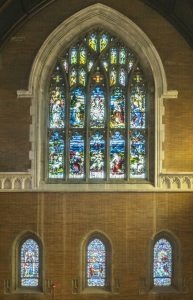
Moving from the west transept toward the rear of the nave, these windows depict the early life of Jesus through scenes of the Annunciation, Presentation, Adoration of the Magi, work, and wisdom.
Clerestory
Six windows high above the nave depict 12 Hebrew prophets.
West Transept
The west transept features the large Nativity Window and three smaller stained-glass windows beneath it:
- The Nativity Window: Mary and Joseph cradle the Christ Child as angels sing and celebrate his birth. Shepherds approach in awe and wonder.
- St. Anne and Mary: St. Anne, the mother of Mary, teaches her daughter the Torah.
- Mary, Jesus, and John: The Virgin Mary introduces Jesus to his cousin, John.
- The Visitation: The Virgin Mary visits her relative, St. Elizabeth.
East Windows

East Aisle
Moving from the rear of the nave toward the east transept, these windows illustrate Christ’s ministry and teachings through scenes of blessing, teaching, preaching, healing, forgiveness, and prayer. Created by Burnham Studios, the windows were installed in the late 1930s.
Clerestory
Six windows high above the nave depict the 12 apostles and their works.
East Transept
The east transept features three distinctive stained-glass windows:
- Crucifixion and Entombment: A small, 15th-century Flemish window depicting the Crucifixion and burial of Christ.
- Medieval Window: A small window assembled from fragments of historic stained glass from Norwich, England, illustrating scenes of everyday life.
- The Resurrection of Christ: The largest window, located in the center of the east transept, depicts Christ robed in crimson, triumphing over death. Three women arrive at the tomb with spices to anoint his body, while Peter and John also visit the empty tomb.
Te Deum Window

Located above the high altar, this stained-glass window depicts Christ enthroned at the center, surrounded by apostles, saints, and archangels. It also features figures from the early church and American Episcopal history, including Samuel Seabury, the first Episcopal bishop in the United States, and Philander Chase, the first bishop of the Diocese of Ohio.