For many people who use hearing aids, hearing everything at a church service can be a challenge. Even with amplification, background noise, echoes, and distance from the speaker can make it difficult to fully participate. At Trinity Cathedral, hearing loop technology is helping to bridge that gap—offering a clearer, more direct listening experience.
Dorothy Miller, a member of the Trinity community, first encountered hearing loop technology while attending an Easter service in York, England. Reflecting on that experience, she recalls, “I was seated halfway back in the nave, surrounded by thousands of people. When I turned on the telecoils in my hearing aids, I heard as if the Bishop were sitting right next to me.”
That moment left a lasting impression. When she later moved to Cleveland and began attending Trinity, she was relieved when a hearing loop was installed in the nave. “Without it, I wouldn’t be able to hear everything that is said,” she notes.
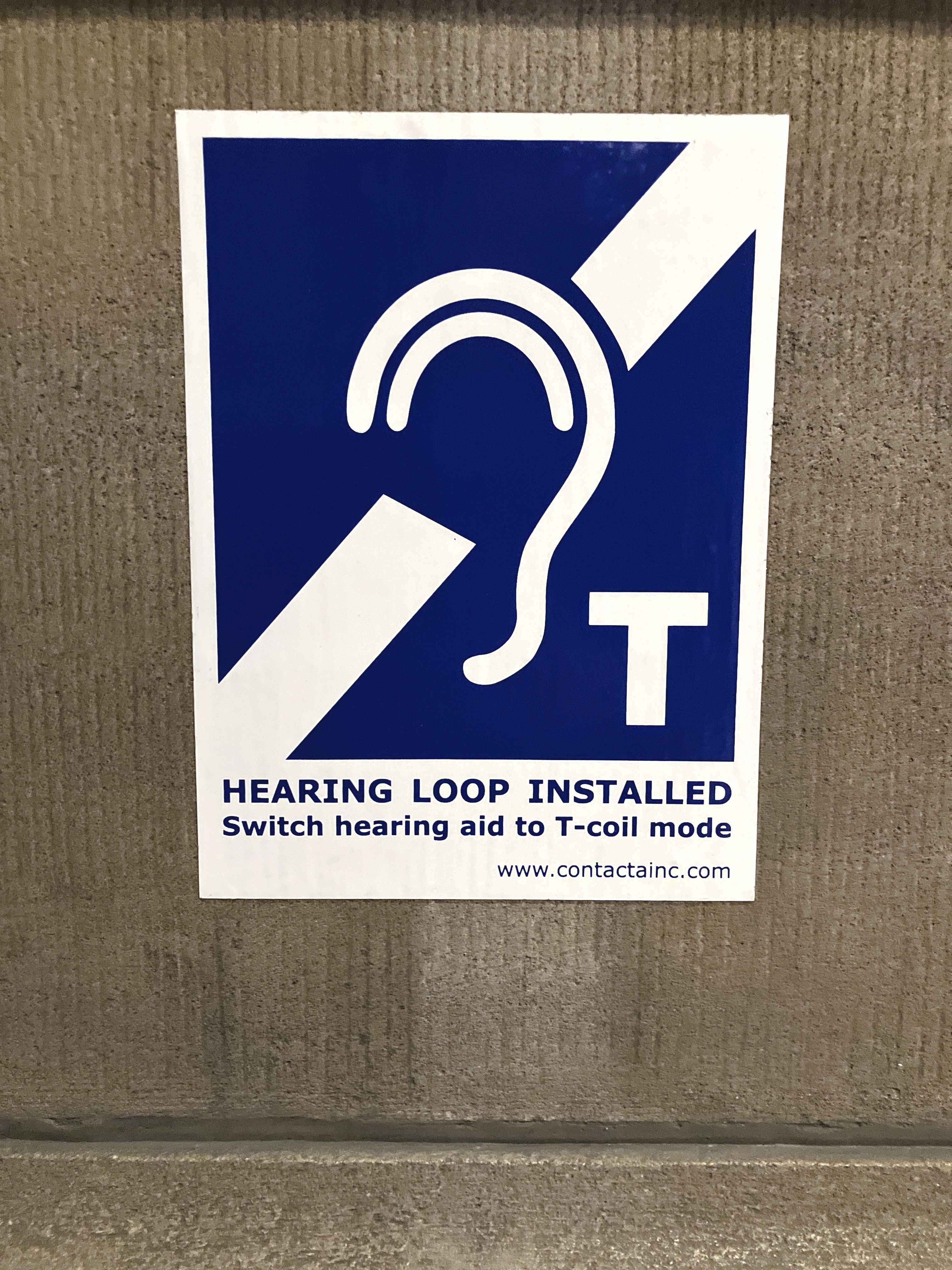
Hearing loops—also known as induction loops—are systems made up of copper wiring installed around a space and connected to microphones. At Trinity, the loop in the nave is installed in the cathedral basement ceiling and provides coverage from the front to the back. Additional loops are available in the Chapel, Meeting Room A, and Cathedral Hall. For the system to work effectively in group settings, speakers must use microphones so their voices are transmitted through the loop.
The technology works in tandem with telecoils, small copper components built into many hearing aids. In some devices, telecoils activate automatically when entering a looped space. Others have to be turned on manually. Once activated, the sound is transmitted directly to the hearing aid, bypassing ambient noise such as echoes and other distractions. As Miller explains, “The sound goes straight to the hearing aid, so you’re not competing with background noise, such as echoes and crying babies. It’s adjusted exactly to your own hearing needs.”
Unlike traditional assistive listening systems, hearing loops do not require hearing aid users to borrow additional equipment such as headphones or neck loops. This makes them both discreet and easy to use. While emerging technologies like Auracast may eventually offer new options, they are not yet widely available and will require additional devices to function. In contrast, hearing loops remain a simple and effective solution—and many newer systems and hearing aids are being designed to be “Auracast ready” for the future.
Most modern hearing aids include telecoils, but they are not always activated by default. An audiologist or hearing instrument specialist can quickly confirm whether a device includes a telecoil and activate it if needed.
Want to learn more? Resources such as the Center for Hearing Access offer extensive information, including directories of looped locations across Ohio and the United States.